Wednesday, June 15, 2016

Pip Progress: Pip's Picnic

I always focus on my dog's emotions and stress levels in a situation. I teach Pip to make good choices when she's stressed and teach her healthy coping mechanisms such as being able to look at and look away from the things that used to trigger her into an aggressive display (barking and lunging). I teach her she should sniff the ground when feeling mildly stressed instead of fixating on her triggers until she reacts. 


In the above video, which is from April 2016, I'm teaching her that she has the choice to move away, ask for space, and you can actually see that this has carried over to so much of her other training as well. Her behavior issue of biting me after walks is completely gone and I can safely take off her harness after walks without risk of a bite. And... Pip went to a picnic!


These two videos above are of Pip at a picnic which are very recent (June 2016)! She did amazing and was comfortable and quiet. I could not have done in a few months ago and she would have been panic-barking at everyone without all of the work I've made on teaching her how to cope with stress, make good choices, and trust me.

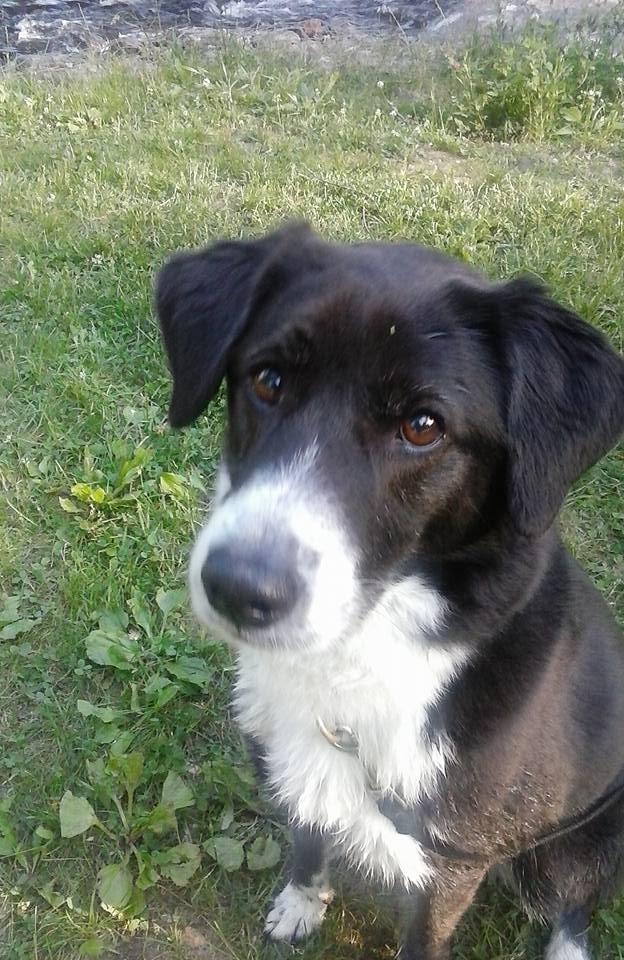
Pip was very easy to manage at the picnic. She didn't bark or lunge at anybody and was mostly quietly moseying around. To the left is a photograph of the Pipster being comfortable at the picnic.

What helped her a lot was Otis being there. Otis is the black and white dog. He's a chow-dalmatian mix and is, believe it or not, ten years old. He's my dad's dog, but I was the one who trained him, so I often say my dog when referring to him. Otis used to be incredibly dog- and human-aggressive, but you can see from the videos how Otis is always welcome at picnics and parades now. I used the same training I used for Pip (teaching to make good choices and stay relaxed). I used all positive methods and did not introduce punishments in any part of the behavior modification.

I can't wait until Pip is able to be chill like Otis. Her temperament underneath her nervousness is actually a lot better than Otis's anxious one so I believe she'll eventually be confident enough to trial.

Otis sniffing Pip calmly. It's very important to me that my dogs are able to
show calm interest in other dogs instead of being aggressive or too excited.

Otis walking away after sniffing while Pip shows interest in a person.

Otis is probably the most photogenic dog ever. Show him a camera, he models.

In comparison, Pip really has to work on her modelling skills.


Wednesday, March 23, 2016

Pip Progress: Graduation and Distraction Training

Pip has graduated from her Basic Obedience class with flying colors. She started as the creepy kid yelling in the corner and just a whirlwind of mayhem and stress and fear to the best little doggy I could ever hope for! She still needs help with her fear of people, but lately it has been easily manageable as she doesn't really have the intense freak-outs that she used to have. At the end of the class, she held a stay in a crowded room with a happy expression. "I got this," she seemed to be saying with confidence. I just have to keep working with her.

Now that she's less fearful all around, I have been able to really amp up the difficulty of her distraction training and have taken it outside. She does great near our apartment and in grassy fields, but still falls apart in pet stores and other enclosed, indoor spaces with tons of people.


Look at this video, I can't believe how far she's come. She's my lovely girl. You can see directly how difficult games indoors and asking her to choose me over the reward over and over again helps her to be able to process the distractions outside and tune them out. To me, she looks like a typical, young dog in this video. Before, she wasn't able to do this. But she's been improving steadily day by day.

Most of my training had been on what I consider important foundation skills as well as teaching her how to be less afraid of the world. Now, I'm finally able to work on fun tricks. She learned "tall" (standing up on her hind legs) and "wave" (lifting her left paw in the air) rather quickly.


Here I'm attaching a verbal cue to her wave behavior. I've also been teaching her backwards circles around me. She's actually getting it really fast and I didn't need the wall since she backs up directly straight from my hand, so I just sort of chase her around me with my "back up" hand signal. Once she has muscle memory and fluency with this exercise, I will attach the word and then fade my hand. She's already starting to get the rhythm of the trick. I'll try to film the progress we're making on that trick.

Monday, February 29, 2016

Increasing Difficulty and Handling Mistakes

When training your dog, you want to vary the challenges you give her. Sometimes, it will be hard and sometimes it will be easy. And sometimes, you'll hit that sweet spot where it's hard enough for the dog to feel challenged and easy enough for the dog to win, over and over again.  Challenge and mistakes are a natural part of training, especially once you get into the more advanced stages of your training. When laying down foundations, you want the learning to be as errorless as possible.


I started the training session by combining two well-known behaviors in a training session, matwork and platformwork. I expected her to make a few mistakes, but she did it perfectly from the get-go, even with the cookies on the floor. She didn't even look at the cookies on the floor. I finished this set (I train so that the short sets contain only a few reps) and continued with the session. Some sets were easier than this one and some were much harder. And it's okay if the dog makes some mistakes on the harder ones. It just all depends on how the mistakes are handled and what the team learns from them.


Here are some of the mistakes Pip made in this session. I picked out the two reps that I think show some good ways to teach your dog about how the team will handle mistakes. In the first rep, I show Pip she's allowed to take alternative routes if the temptation is too great. She follows my direction and hops onto the mat when asked. After she finished that, I asked her to hop onto the platform. It is obviously hard for her to make that choice, but in the end, she made it and didn't need to take the alternative route. I reward her not just with treats, but with a couple easy reps.

After a few easy sets, I ask for another which is too difficult for her. I try to make it easy by calling her away from the food, but the temptation is too great and she runs over and starts eating the food on the floor. I don't chase her or move her or rush her. Instead, I hurry to save the rest of the treats and then I put away the props so that it's very obvious that the consequence for deciding "Well, now it's too hard, I'll just do what I want" is that the training session ends. You can see how she begs to try again. When I set up the props, she tries them both in turn.

However, this time, notice that I make it only slightly easier for her because I understand I pushed her way too hard in that rep and I knew I did (bad trainer). I didn't want to make it too easy (which would teach her that if she doesn't feel like doing something, she should mess up and then I'll make it easy for her) so I put the treats not between the two props but alongside the path she would take. On the way to the mat, she slows down for a second to look at the treats. She knows it's too tempting when I ask her to go to the platform, so notice that she makes a slight arc away from the treats (perfectly OK) and makes it to the platform. I end the set and the session there.

Monday, February 22, 2016

Pip Progress: Bathtub Progress, Replacing Fear with Joy

A lot of people don't realize how much anxiety, worry, fear quashes confidence and joy. I remember when I first brought her home, Piper was a quiet and shut down dog. Most people who met her thought she was polite and sweet. I find it very sad that most people prefer a shut down dog over one who is bursting with confidence and joy. But once a dog can stay calm and keep that confidence and joy, they really notice.

Some of you may know that Pip used to be deathly afraid of taking a bath in the tub. Nowadays, she's actually excited to hear the word "tub" because it means we are going to play her favorite training games using highly valued treats in the tub.


Watch how, in the beginning of the video, she perks up at the word and hurries to the bathroom. She is so excited that she forgets to use the green platform to climb into the tub. Once she puts her brain back inside her head, she uses the path I showed her. I want to replace her fear with joy.

You can't just feed the dog their favorite treats in the scariest place in the world to them. Even if they get used to it, there is a lot more involved in dissolving fears. You need the dog to understand that, at any moment, they could leave the situation. Teach your dog she has choices. Build a system of consent. Empower them

One of the most important games we play in the tub are in and out games which she accomplishes on her own volition. I give her a path to safely hop in and safely hop out. I play a lot of impulse control games in situations where I want my dog to stay calm in. Remember that dogs do not learn only by consequence, but by association. Most impulse control training creates a calmer, more focused dog and if the tub = calm and focused, it's easier to work on things like water and bubbles in the tub.

I'm also taking the online course for cooperative canine care, as showing an animal how to be an active participant in her care is something I am passionate about and wanted to expand my knowledge on. 

Saturday, February 13, 2016

Think about Sets and Reps! Building Intense Focus and Love of Learning.

I get a lot of compliments about how much attention my pets give me when I train them. There's a lot of reasons for this. I carefully build a love of learning and today I'm going to share a huge tip that I use all the time.

When training a dog, a very common mistake is to go on and on and on in a training session until a dog checks out. This is very easy to do, especially when your dog is doing awesome! However, it's important to remember that dogs don't just learn through consequences, but also through associations and the habits they build. In addition, training in sets helps nervous or high-strung dogs stay calm enough to learn and gives them much-needed relief from the pressure of learning and thinking.


Here, I use short sets to work on making Pip's downs nicer and quicker. Note how short I keep the sets. Note the small breaks between sets to keep her from getting overstimulated (and for nervous dogs, from getting too overwhelmed). 

With short sets, it's easy to keep the dog's motivation throughout that small moment. Thus, the dog associates training with focusing on you and trying her best. She'll build a habit of trying and working hard instead of walking away and ignoring you. With this method, you'll have a dog who begs for more training at the end of a session!

Saturday, January 30, 2016

Pip Progress: Super Pup Pip

Pip has been really awesome this past month. From silent mornings without a peep to choosing to be calm rather than crazy in the daytime to snuggling with me rather than biting me. She's really such a neat little dog! We've tackled all of her issues with lack of self control, lack of confidence in general, as well as how she becomes easily overstimulated and bitey. Her only real issue remaining is her fearfulness towards humans, but that was the big issue from the beginning.


Pip's off switch in action! But really, once you teach a dog how to calm down, relax, and unwind, the dog is a lot easier to live with. It's not just constantly trying to wear the dog out until they cannot physically move any more.

Her classes have been going well. She's now the little overachiever and can participate in all of the class activities. She is doing awesome and I know that, in no time, she's going to be a little Rally dog and earning titles and feeling so proud of herself.

We've made more progress with phasing treats and toys out of her training here and she can go a full minute without any sign of them. She trusts that I'm good for it down the road: She knows that, as long as she works her heart out, I'll appreciate all of her efforts.


Now, the last blog post, Order of Events: How Best to Introduce Cold Trials, introduces the idea of following cold trials with training sessions, walks, and other things. These are excerpts from the session following the above cold trial session.


Something new (about 2:15) that Pip is working on is being able to be called away from treats which I've said she could have. I love how she rushes to the food, but stops dead in her tracks to listen to my words. This has only worked because I built a strong habit of choosing work over rewards. I am going to build distance to it and work so that she will be able to run away from me to take her reward, but stop to listen if I give her a cue. This is building towards being able to stop on a dime and listen when she is mid-chase after squirrels.

Monday, January 25, 2016

Order of Events: How to Best Introduce Cold Trials

An important part of training is teaching the dog how to perform whether or not there are rewards on you. Many trainers start to introduce "cold trials" to their dog's training once they are fluent in the behavior. Cold trials test a dog's understanding of the behaviors she has been taught. However, if you constantly work your dog with no reward in sight, your dog will look at you and say, "No cookies?" and opt out. Many people make the mistake of, when their dog refuses to perform, show the dog just how good the reward is going to be if only they'd listen. This teaches the dog to wait until you "show them the goods" before they decide if it's worth it.

You don't want cold trials to teach your dog to do this. You want them to teach your dog to listen to you whether or not you have cookies on you. A good way to do this is to pay attention to the order of events each day. I know when I'm going to break out the toys to play with Pip, when I'm about to start a training session, when we are going for a walk, when I'm about to feed her. I know all of this because I take care of her. Why not use it to my advantage?


In this video, I am training Pip. I have not gotten any toys or food out. All she has is me and the training I've done. When you do a cold trial, it makes it very clear what you need to work on. Pip needs work on sits and downs on verbal cue only. She is great with heel.

Notice the small amount of time I work with her (about 30 seconds). It's better for these cold trials to be short and rewarding, at first. Stop while your dog is doing amazing, when they give you a little more, and reward that with whatever fun follows. In this case, it's a training session. Sometimes, it's a play session. Other times, I give her breakfast or take her on a walk.

Some tips for cold trails:

  • Only work on behaviors the dog is fluent in.
    If your dog fails at anything or just doesn't do it to the standard you like, do not continue or drill it during the cold trial. Move onto something else.
  • Do not correct mistakes
    Even an "AH AH" or "no, that's wrong" can teach the dog that they can't do it right without the cookies. Also, do not reach for treats to make sure the dog can do it right. Mistakes tell you that you need to work on it in training sessions.
  • End it while your dog is on fire and is doing awesome!
    You want your dog to associate trying her hardest when you don't have cookies or toys on you rather than her weakest. If you end it when your dog is weak, she will learn to drift off to escape the "sucky no-rewards are ever coming" time.